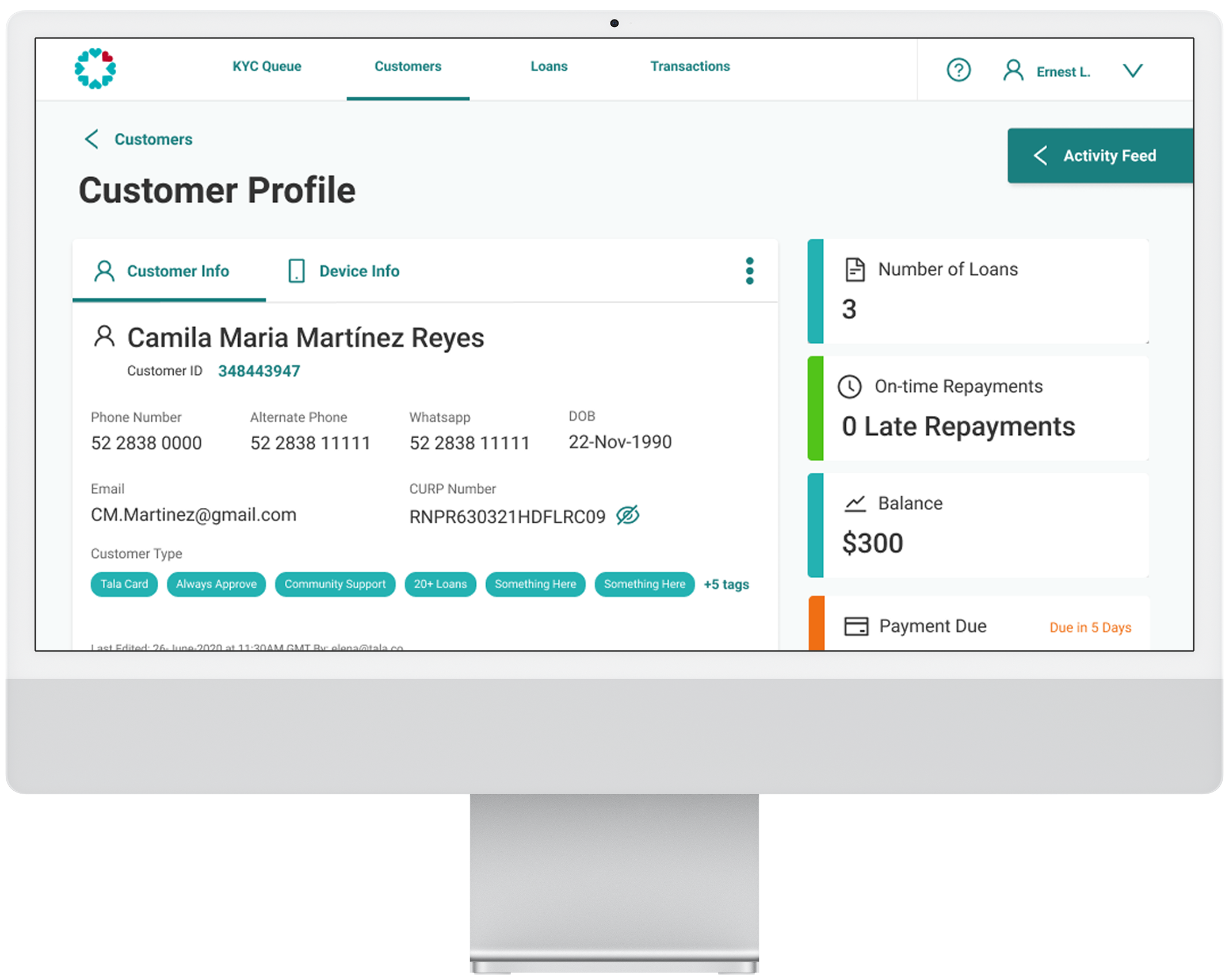
Tala
Tala - a fintech start-up that provides loans to customers in Mexico, India, Kenya and Philippines via a B2C Android app - strived to create a new SaaS based internal product for their multi-country customer support teams. The idea was the help CSRs respond faster to customer calls, quickly address any questions, and process shorter customer inquires. I was brought in to craft the end-to-end process of CARE Atlas. Driving both design and research capabilities, I built a design that worked for all markets as well brushed up on my high school Spanish.
How can we build a internal SaaS platform that empowers multicultural advocate teams while speeding up customer service to drive brand trust and retention?
Usability GoalsDesign a multi-language, user-friendly platform for non-English speaking and non–tech-savvy advocates, streamlining functionality and layout for quick access to key information and integrating third-party tools into a single, centralized interface.
Business GoalsDevelop an all-in-one platform to reduce Tala’s third-party platform costs, boost advocate productivity and quota achievement, and enhance customer loyalty through empathetic, efficient service.
Predicted OutcomeDesign a new platform tailored to Tala’s customers and advocates, aiming to reduce cognitive overload and improve communication. The platform aligns B2C app language with advocate tools, enabling clearer understanding and quicker responses to customer inquiries.


Before design work went deep underway, I set up 2-day virtual Design Thinking Sessions for our Mexico and Philippines teams to find out some needs.
Stay loyalStakeholders want to pivot from just contact information and checking loan information, they also wanted to build in a way to see customer loyalty.
Callout the baddiesBroadly offering rewards to all customers is counterproductive. By allowing advocates to reward “bad players,” we lose focus on the 100% of “good players” who consistently repay their loans on time.
You can play the player but not the coachFinancial coaching for advocates to help them understand the business of finances for the customers they serve in each country.
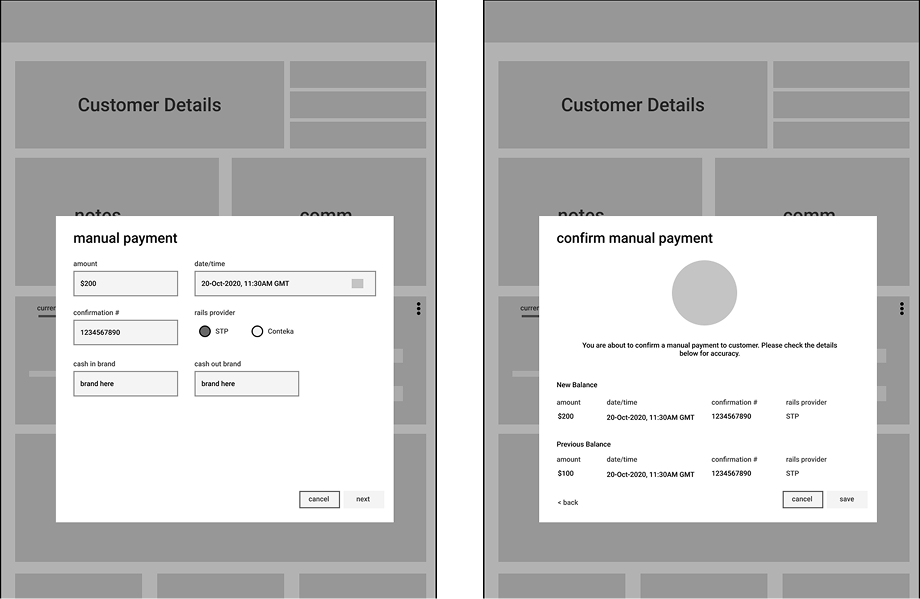
We launched in Mexico first, where I designed wireframes for complex features like refunds and profile updates. Following an agile process, I translated PM specs into UX flows and validated them with stakeholders before moving to high-fidelity design.
I also established a small design system in Figma, creating a library of reusable components and documentation. This ensured visual consistency across the platform and significantly accelerated the handoff and implementation process for the engineering team.
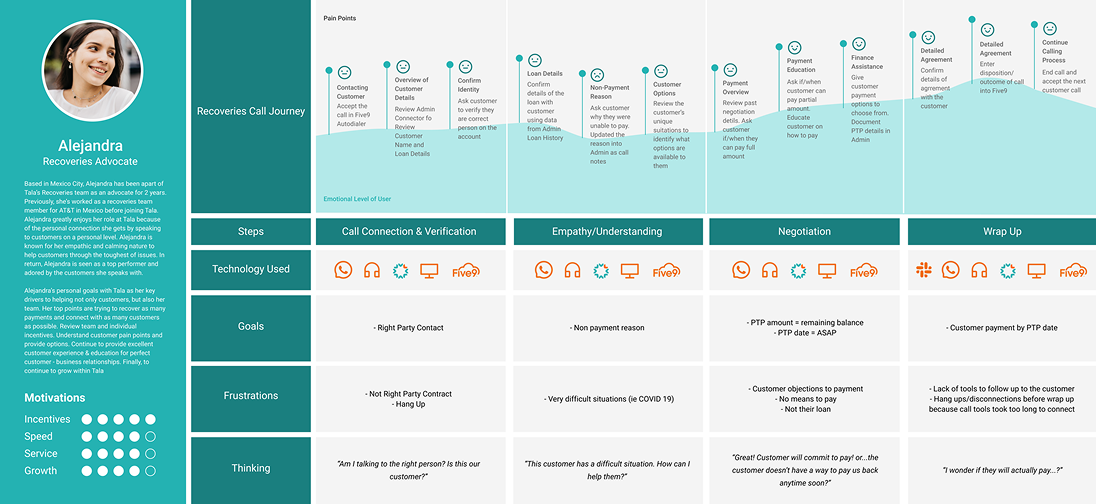
I created a detailed journey map for customer support by synthesizing insights from Design Thinking sessions, customer advocate interviews, and past CARE project research. The map highlighted pain points in support interactions, particularly stress during customer calls due to platform limitations and inconsistent terminology between the customer app and advocate tools. It aimed to improve advocate efficiency and reduce call-related anxiety.
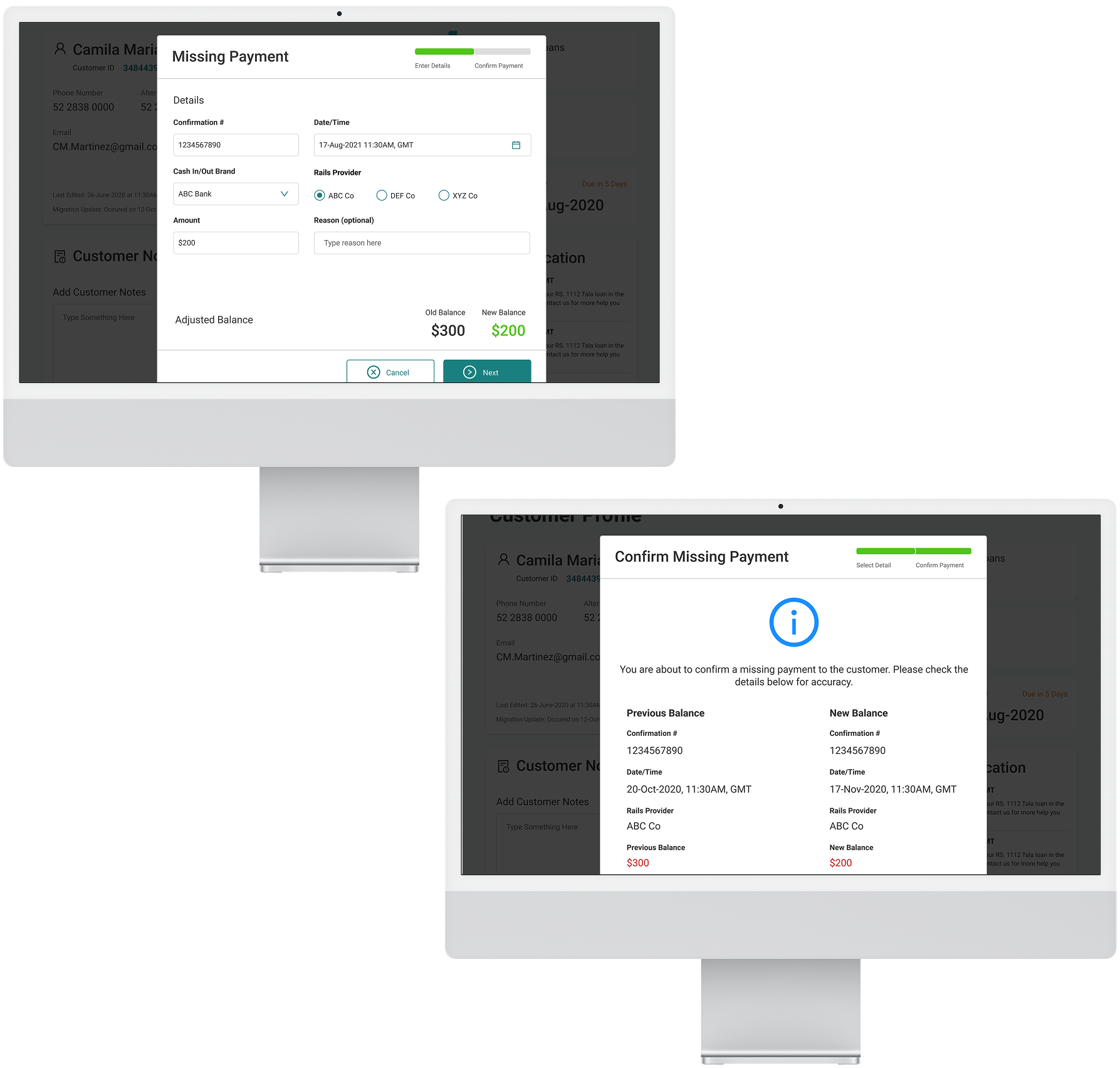
Missing payments was created to help advocate research and apply payments to customers’ accounts. This feature was built in due to the fact customers had issues with their apps pulling from their banks so they would call in to make sure payments would go through.
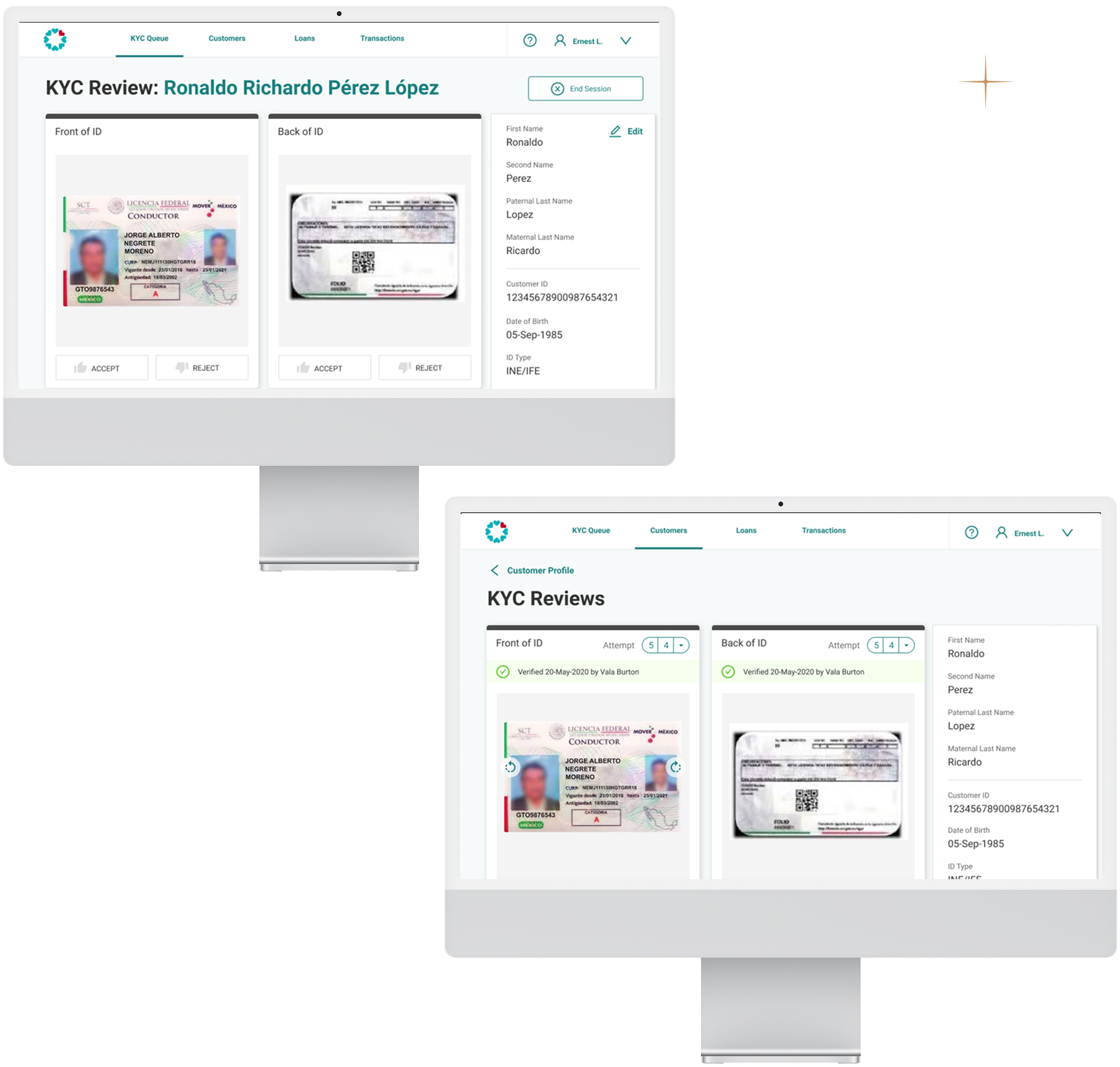
To approve loans, Tala utilized a KYC flow within the customer app that populated data into the CARE platform for advocate review. To streamline this process, developers integrated automated detection to flag discrepancies in user-submitted photos for easier approval or denial.
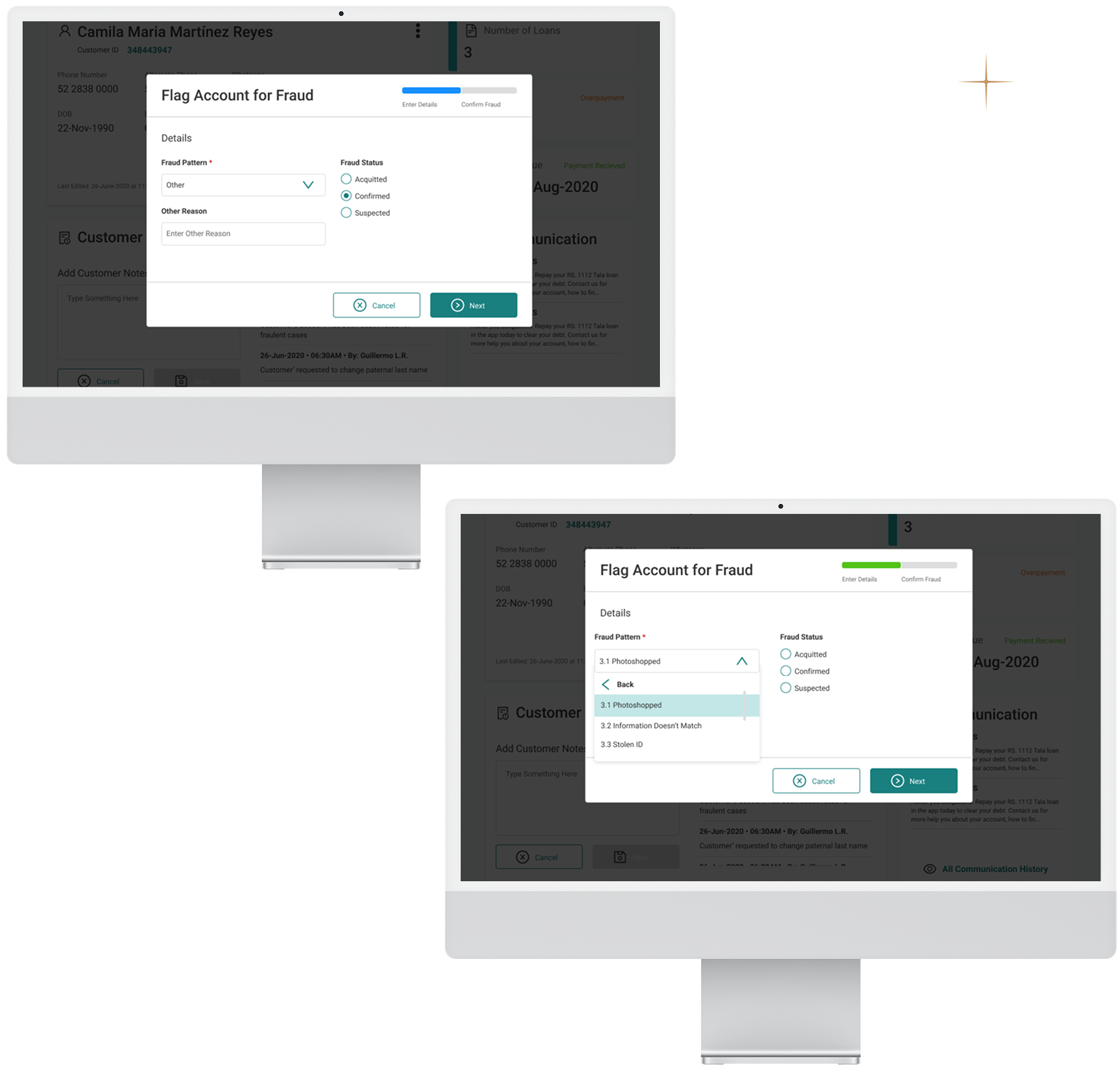
Fraud reports was a new feature that was built to flag customers who broke protocol with Tala’s rules on loans or fake customers signed up using stolen information. Customers could be easily flagged by an advocate upon request or from company information.
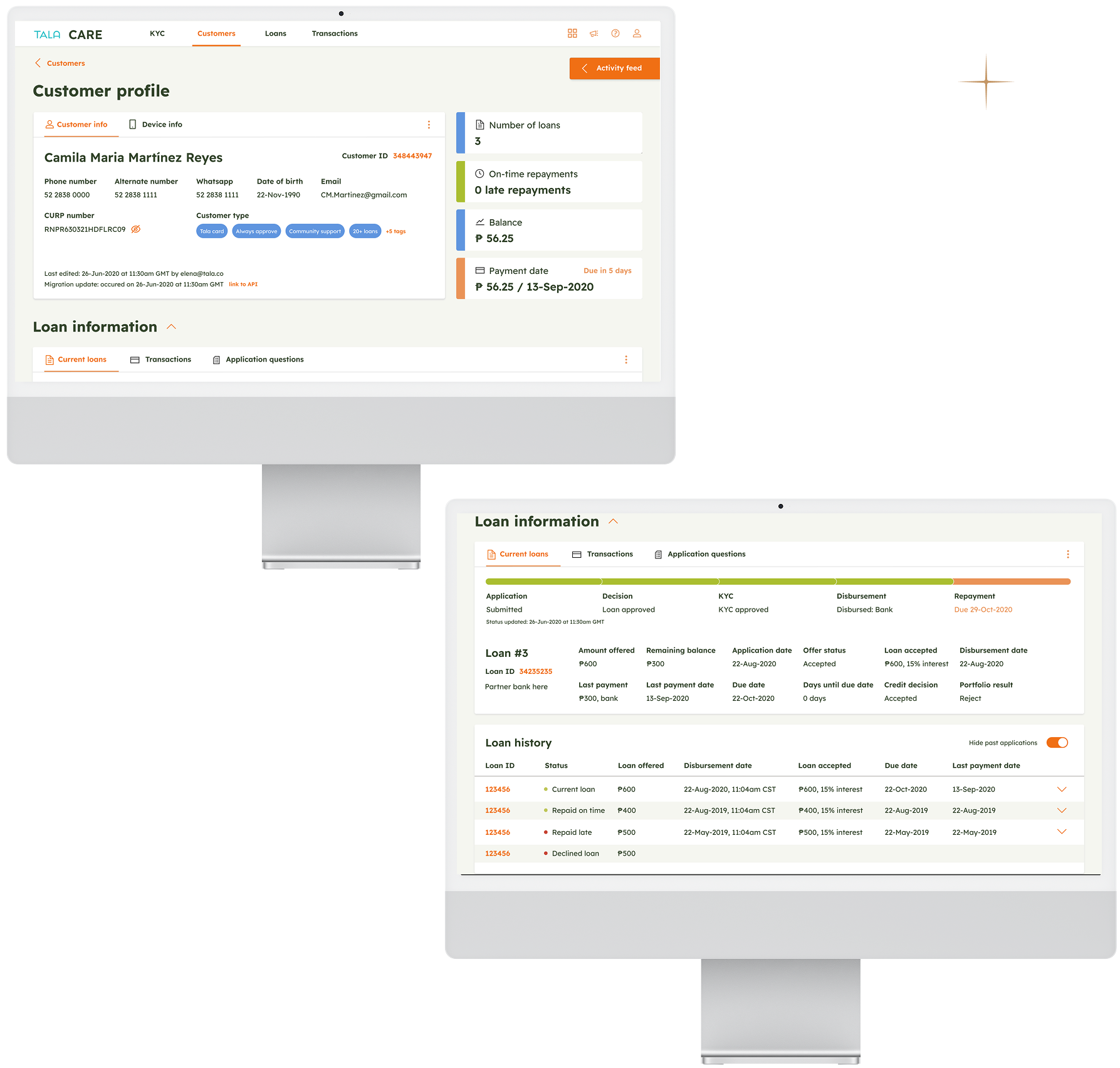
As part of the Tala Design System build, I wanted to include the CARE product to reflect what Tala was doing on it’s customer app.
I updated colors, fonts, and iconography to align with the new rebrand. I wanted to show the CARE team this concept and to analyze, incorporating layout enhancements based on post-launch feedback from Advocates.

I partnered with my PM to conduct 1:1 Google Meet interviews, validating user flows through testing sessions. We engaged 10 participants across three countries to ensure global platform alignment.
Locating information was easy as 1,2,3The new designs vastly improved how fast customer support members could find customer information, log certain activities to the account and be able to click less into flows. In total took less than 20 seconds for each task or feature to complete.
Español, por favorMexico advocates needed CARE to be translated into Spanish as it would help them learn the new program quicker as some were non-English speakers.
Zendesk, who?Users found CARE to be more efficient than the other 3rd party applications they used such as Zendesk and Five 9.
CARE launched in September of 2021 to Tala’s Mexico and PH advocates. Metrics were captured via Looker and word of mouth.
‘Mam this is a Wendy’sAdvocates soon began taking more customer inquiry calls by a staggering 22% increase. On average customer calls lasted 5–10 minutes vs 15–30 minutes.
So long, loser!Zendesk was to be retired by 2022 as it was the most expensive for Tala to pay for each year.
Buddy system7% of advocates struggled to learn a new platform. These certain individuals were asked to tag team with advocates who learnt the platform quickly to have a ‘buddy’ to ask questions to.
Paving the way for the futureApplying Tala’s rebrand to CARE and adding dashboard metrics for advocate managers was on the bill for post launch onwards.